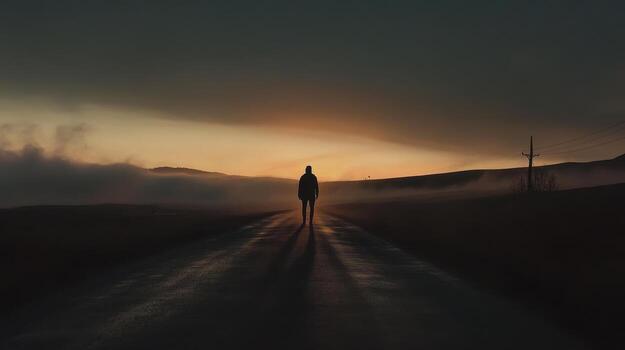
What happens when the street learns to vote and what Europe’s marches are still waiting for.
A Brazilian runoff, a Serbian ballot and a month of marches across Europe. One Sunday in October put them in the same frame.
On Sunday, October 25, two countries answered the same question in different accents: who decides what comes next? In Brazil, Luiz Inácio Lula da Silva, 80, won a record fourth non-consecutive term, 51.79% to 48.21% of valid votes over Flávio Bolsonaro. He overturned a first-round defeat and did it after polls had shown a virtual tie. In Serbia, a student-led list declared victory in parliamentary elections, ending 14 years in power for Aleksandar Vučić’s party, and Vučić conceded less than two hours after the polls closed. B
Put the two results side by side and the picture and what come out is not ideology but significant participation.
Two ballots, one Sunday
In Brazil, a pollster credited higher-than-expected turnout, with fewer abstentions, as one factor in Lula’s win. Bloomberg described the result as halting a right-wing wave sweeping Latin America, which is the kind of sentence that will be quoted in many op-eds this week, including some that are less careful than this one.
Serbia is the more unusual story. The Student List was not created as a conventional political party. It emerged from demonstrations and fielded candidates from professions like medicine and education, many with no political experience, with some established opposition parties backing it rather than running their own candidates. The movement grew from the street: the protests were sparked by a fatal building collapse at a railway station and described as the largest in Serbia since the fall of Milošević 25 years ago. For nearly two years, students rallied and marched across the country to reach voters directly and counter the ruling party’s media machine. On election night, several hundred citizens removed the fences and tore down the tents of a protest camp outside parliament that had stood since March 2025. As images go, that one needs no caption.
Brussels noticed. Ursula von der Leyen congratulated the Student List and said the EU stands ready to support reforms on rule of law, media freedom and the fight against corruption.
The streets that have not found a ballot box yet
Now widen the lens. The first demonstrations began in France last month and the unrest has since spread to six countries. The grievances are not identical, but they rhyme. Al Jazeera described shared complaints about underfunded education, rising living costs and, for students, uncertain prospects after graduation. CNBC added that the wars in Iran and Ukraine have pushed diesel prices sharply higher, and that housing costs are a particular flashpoint, with protests over pensions, housing, education, corruption and opposition to war from Milan and Madrid to Lisbon and Tirana.
The scale is real. On October 17, more than 550,000 people joined demonstrations in France, and a week later authorities counted 410,000 nationwide, with about 1,300 arrests.
This is where Serbia becomes useful as a case study. A protest is a statement; an election is a mechanism. Serbia’s movement spent two years building a bridge between the two and the result arrived on election night. Europe’s marches are still mostly in the statement phase, which is not a criticism so much as a stage. Whether they find a mechanism is the question of the winter.
What the photograph doesn’t show
Every strong image leaves things out and this one has plenty of borders.
Brazil’s margin is thin, about 3.6 points, or 4.4 million votes, and the loser has rejected the result. Al Jazeera notes the runoff was marred by voting confusion and allegations of interference. Nearly half of voters chose the other candidate, which any serious reading of the result has to hold alongside the headline.
In Serbia, the students now face a different test. As Euronews put it, they will have to show that their political legitimacy can become effective state governance. Reporting from a year ago also noted signs that far-right nationalist groups had tried to infiltrate and even hijack the movement, and a competing narrative is already circulating that frames the night as a revolution carried out with the direct support of foreign countries. The winners will have to answer both.
In Europe, the street has not been uniformly peaceful. Violent fringe groups targeted public buildings, luxury boutiques and supermarkets in France, and the interior minister blamed black-clad “ultra-left” extremists, while noting that most marches stayed peaceful. Different readers will weigh that differently: as a security problem, as a symptom of political neglect, or as both at once. Grievances shared across countries do not guarantee a shared program, either, and the issues differ significantly depending on location.
The frame, and what comes after
If there is one lesson in the picture, it is that disaffection looks for an exit. In Brazil it found one through a runoff and in Serbia through a list that began as a protest. In much of Europe it is still on the pavement, building barricades with bikes and scooters and asking governments to answer for rent, fuel, tuition and time.
A photograph freezes a moment. The hard part starts after the shutter clicks: certifying a result, writing a program, governing a country. The generation that knows how to organize a march now has to show it can organize the morning after. And we have high hopes on that.