On fate, coincidence, and the invisible architecture of a life and why some moments only become meaningful once you look back.
Some moments in life seem completely insignificant while they are happening.
A conversation you almost didn’t have.
A train you nearly missed.
A person you met on a Tuesday and forgot about by Friday.
A message you answered because you happened to be awake.
A city you chose for reasons that had nothing to do with the life you would eventually build there.
At the time, none of it feels important.
It is simply Tuesday.
Simply a wrong turn.
Simply a stranger.
Simply a decision made because one option was cheaper, easier, closer, available.
And then, years later, you look back and realize that the insignificant thing was not insignificant at all.
It was a hinge.
You just didn’t know it yet.
This is one of the strangest things about being alive:
we understand the meaning of some events only after they have already changed us.
THE ILLUSION OF THE DECISION
We like to believe we are the authors of our lives.
We choose the university.
The city.
The job.
The person.
The apartment.
The flight.
The night we go out.
The night we stay home.
We build a narrative in which one decision leads logically to another.
Cause.
Effect.
Progress.
It is comforting.
It is also probably incomplete.
Because behind almost every decision is a series of things we did not decide.
The family we were born into.
The language we first learned.
The city that shaped our idea of normal.
The person who happened to sit beside us.
The illness that changed our priorities.
The stranger who introduced us to someone.
The opportunity that arrived because somebody else cancelled.
The door that opened because another one closed.
At some point, the line between choice and circumstance becomes impossible to see.
We call it my life.
But how much of it was ever entirely ours to choose?
THE THINGS THAT LOOK LIKE NOTHING
Some of the most important events in our lives arrive disguised as nothing.
That is their greatest trick.
We expect significance to announce itself.
We imagine that important moments should feel important.
The wedding.
The goodbye.
The job offer.
The plane ticket.
The diagnosis.
The first kiss.
But life rarely gives us subtitles.
Sometimes the moment that changes everything feels completely ordinary.
You are drinking coffee.
You are walking home.
You are scrolling through your phone.
Someone says something you almost don’t hear.
You make a decision without knowing it is a decision.
And then life rearranges itself around that moment.
Years later, you can trace a line backward.
If I hadn’t gone there…
If I hadn’t answered…
If I had taken the other train…
If she hadn’t introduced us…
If he hadn’t cancelled…
The entire architecture of your life can sometimes rest on a moment that, at the time, barely registered.
JUNG CALLED IT SYNCHRONICITY
Carl Jung had a name for a certain kind of coincidence: synchronicity.
Not simply two things happening at the same time but two events that are not obviously connected by cause and effect and yet acquire a particular meaning when experienced together.
It is a seductive idea because it sits between rationality and mystery.
You don’t have to believe that the universe sent you a sign.
You don’t have to believe that everything happens for a reason.
You only have to admit that sometimes coincidence feels strangely on time. Probably because the chance really doesn’t exist.
A person appears when you are thinking about them.
A book lands in your hands when you are asking exactly the question it seems to answer.
You hear a sentence at the exact moment you needed to hear it.
You meet someone who, in retrospect, seems to have been waiting somewhere inside the architecture of your life before you even knew you were going to meet them.
Was it fate?
Pattern recognition?
Meaning imposed after the fact?
Maybe.
But the more interesting question is not what caused it?
It is:
What did it become?
THE PAST IS ALWAYS REWRITING THE PRESENT
This is where Borges becomes impossible to avoid.
Borges understood something about time that feels almost unnervingly modern: that the past is not as fixed as we imagine it to be.
We remember events differently once we know what came after them.
A meaningless conversation becomes the beginning of a friendship.
A rejection becomes the reason you moved cities.
A breakup becomes the beginning of another life.
A missed opportunity becomes the event that redirected you toward something better.
The event itself has not changed.
Its meaning has.
And meaning is one of the few things that time is actually allowed to rewrite.
We are constantly reading our past with information our past selves did not possess.
That is why hindsight can feel almost supernatural.
You know the ending.
The person standing inside the beginning did not.
RUMI AND THE STRANGE LOGIC OF SEEKING
Rumi wrote obsessively about the strange relationship between the seeker and the thing being sought.
In one of the ideas associated with his poetry, the seeker and the sought are not ultimately as separate as they appear.
It is a beautiful thought because it complicates the usual story of desire.
We imagine that we spend our lives looking for things that exist somewhere outside ourselves.
The person.
The place.
The answer.
The home.
The life.
But some forms of seeking are also forms of recognition.
We move toward certain things because some part of us already knows their shape.
Not consciously.
Not rationally.
Just enough to recognize them when they arrive.
Maybe that is why some people feel familiar almost immediately.
Not because we have met them before.
But because something about them fits a shape we have been carrying without knowing its name.
COINCIDENCE ONLY LOOKS LIKE COINCIDENCE FROM THE MIDDLE
This may be the great cruelty of being human:
we experience our lives chronologically but understand them retrospectively.
When you are in the middle of a story, you don’t know which details matter.
Everything has the same weight.
The phone call at 11:42.
The stranger in the elevator.
The cancelled dinner.
The flight you almost didn’t take.
The person you almost didn’t meet.
You cannot know which one will become the sentence you remember twenty years later.
This is why the future is so frightening.
Not because it is empty.
Because it is full of significance we cannot yet identify.
Every ordinary Tuesday is carrying information about a future you have not met.
FATE IS NOT NECESSARILY A SCRIPT
I don’t think fate requires us to believe that every detail has been predetermined.
That version of destiny is too easy.
It turns life into a screenplay in which we are merely waiting for the next scene.
The more interesting idea is that fate may be less about what happens to us and more about what becomes possible because something happened.
A door closes.
Another becomes visible.
A person leaves.
A different version of you emerges.
You miss the train.
You meet someone on the next one.
You lose a job.
You discover that your identity was never supposed to depend on it.
You make a mistake.
Years later, you realize the mistake introduced you to a life you would never have chosen deliberately.
Maybe destiny is not a fixed destination.
Maybe it is the pattern created by everything we could not have planned.
THE DANGEROUS COMFORT OF “EVERYTHING HAPPENS FOR A REASON”
There is something comforting about believing that everything happens for a reason.
Because sometimes terrible things happen.
Sometimes people leave.
Sometimes timing is cruel.
Sometimes there is no hidden lesson waiting patiently inside the pain.
Maybe the universe does not owe us an explanation.
Maybe meaning is something we create afterward.
This, strangely, does not make life less magical.
It makes us more powerful within it.
Because if an event does not arrive with a predetermined meaning, we get to decide what it becomes.
We can turn an ending into an opening.
A loss into a boundary.
A mistake into knowledge.
A coincidence into a story.
Not because it was destined.
Because we lived through it.
THE PEOPLE WE WERE NEVER SUPPOSED TO MEET
And then there are the people.
This is where coincidence becomes most difficult to dismiss.
There are people you meet and forget.
People who remain for six months.
People who stay for twenty years.
People who enter your life for one conversation and somehow alter its direction.
A stranger can become a friend.
A friend can become a lover.
A lover can become a memory.
A memory can become the reason you make an entirely different decision years later.
We like to categorize relationships by duration.
But duration has very little to do with significance.
Some people are chapters.
Some are sentences.
Some are punctuation.
And some are the comma that changes the meaning of the entire sentence.
THE LIFE YOU DIDN’T PLAN
Paulo Coelho has returned again and again to the tension between destiny and choice: the idea that a life is not simply something we control but something we participate in.
And that is the distinction that matters.
We participate.
We do not control.
We make choices.
We do not control the conditions in which those choices exist.
We can decide whom to love.
We cannot decide when they will appear.
We can decide to leave.
We cannot know what leaving will make possible.
We can buy the ticket.
We cannot predict who will be sitting beside us.
This is not a failure of control.
It is the condition of being alive.
LOOKING BACK
There will come a point when you look back at your life and see connections that were invisible while you were living them.
A strange little constellation.
This led there.
That led here.
This person introduced me to that person.
That rejection sent me somewhere else.
That night changed the next five years.
That seemingly meaningless choice became the beginning.
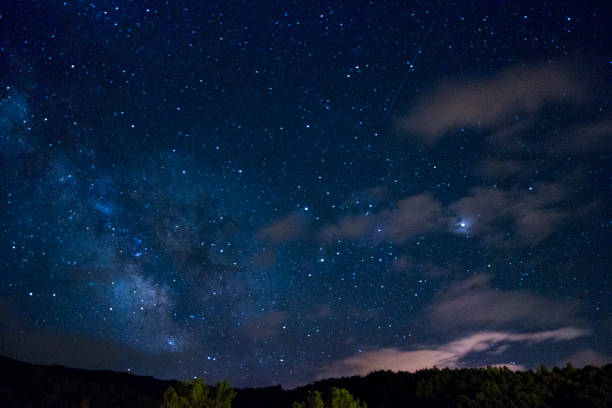
And suddenly your life looks less like a straight line and more like a constellation.
The stars were always there.
You simply did not know which ones belonged together.
Maybe that is why we should be careful about dismissing the insignificant.
We are terrible judges of importance while we are inside the moment.
We think we know what matters.
We usually don’t.
HOW MUCH WAS EVER YOUR DECISION?
The question is not whether we have free will.
It is how much of our lives exists in the space between intention and accident.
We choose.
We are chosen.
We arrive.
We are interrupted.
We miss things.
We find things.
We say yes.
We say no.
And somewhere between all those decisions and accidents, a life takes shape.
Not entirely planned.
Not entirely random.
Something stranger.
Something we can only understand once we have travelled far enough to look backward.
Maybe this is why hindsight can feel like prophecy.
It isn’t.
We are simply seeing the pattern after the pieces have fallen into place.
And the most beautiful thing about that is that the pattern does not need to have been planned in order to be meaningful.
The conversation you almost cancelled mattered.
The wrong turn mattered.
The person you nearly didn’t meet mattered.
The city you chose for reasons you can no longer remember mattered.
The door that closed mattered.
The coincidence mattered.
Not necessarily because the universe had written them there.
But because you did.
By living forward.
By choosing without knowing.
By walking into rooms whose significance you could not possibly have understood yet.
And maybe that is the invisible architecture of a life:
not the things we built,
but the connections we only recognize once we are far enough away to see the shape.
So how much of your life was never your decision?
Probably more than you think.
And that is not the frightening part.
The frightening part would be discovering that every important thing had been decided in advance.
Because if fate leaves some doors to chance,
then coincidence is not the opposite of destiny.
Maybe it is how destiny finds a way to surprise us.